Escape Room Aspects Onboarding Templates: A Guide to Immersive Design Systems
In the world of digital design and user experience, the concept of onboarding—guiding users into a new system or experience—is paramount. But what happens when you infuse that process with the intrigue and puzzle-solving mechanics of an escape room? This is where Escape Room Aspects Onboarding Templates, and specifically curated sets like the Escape room aspects onboarding template set, come into play. These design assets transform mundane introductory screens into an engaging, step-by-step adventure, using thematic elements like ancient keys and puzzles to captivate users from the very first interaction.
What Are Escape Room Aspects Onboarding Templates?
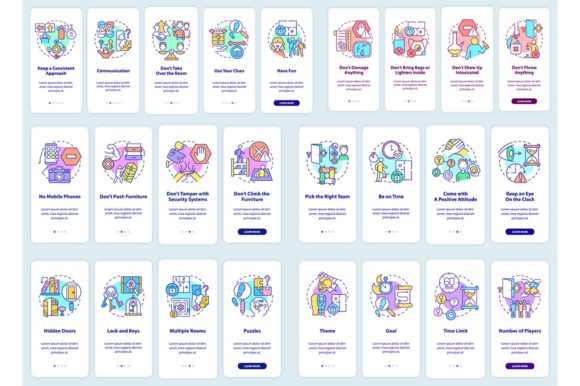
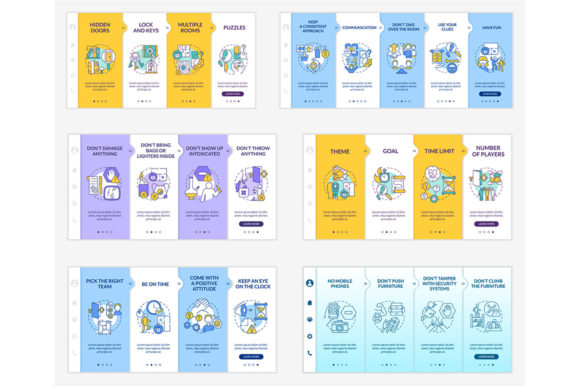
At their core, these templates are pre-designed frameworks for creating the initial screens of a mobile app or website. Unlike standard tutorials, they incorporate the narrative and interactive spirit of an escape room game. Think of a responsive mobile website that doesn't just list features but unveils them like clues. The design often employs a linear concept with clear icons representing each step, creating a visual "walkthrough." A typical set might include a web page walkthrough with 4 step screens, each screen acting as a chamber in the digital escape room, leading the user to the final "escape"—which, in this context, means full understanding and proficiency with the application.
The Key Components: Ancient Keys, Puzzles, and Linear Icons
The thematic elements are crucial for setting the mood and enhancing user engagement. The use of ancient keys and puzzles as visual metaphors is particularly effective. An icon of an ornate key might represent unlocking a new feature, while a puzzle piece icon symbolizes assembling knowledge to understand a complex function. This goes beyond mere decoration; it taps into a user's innate love for discovery and problem-solving. When paired with a clean, linear progression of icons, it creates a structured yet exciting learning path. The visual language is often supported by versatile typography, such as the Lato-Bold and Regular fonts, which offer a modern, readable aesthetic that balances the thematic whimsy with professional clarity.
The Purpose and Significance in Modern Digital Design
The primary purpose of these templates is to drastically improve user onboarding retention and satisfaction. In a landscape where users often abandon apps within minutes if confused or bored, an engaging onboarding sequence can be the difference between success and failure. By framing the onboarding as a game, designers address a key human psychology principle: we are more likely to remember and enjoy processes that involve active participation and reward.
Their significance extends across several domains:
- Business & Work: For productivity or SaaS apps, a puzzle-based onboarding can make learning complex software feel less like a chore and more like an achievement, potentially reducing training time and support costs.
- Education & Creativity: Educational platforms can use this approach to introduce learning modules, turning the start of a course into an intriguing quest for knowledge, thereby boosting student motivation.
- Daily Activities & Technology: Even for everyday apps—like fitness trackers or budgeting tools—an engaging onboarding sets a positive, fun tone for the user's entire experience, encouraging habitual use.
Common Misunderstandings: It's Not Just About Games
A common assumption is that these templates are only suitable for actual game apps. This is a misunderstanding. While they are inspired by escape rooms, their application is far broader. The "escape room aspect" refers to the methodology of onboarding—sequential discovery, visual storytelling, and reward-through-progress—not the final product's genre. A banking app can use a "safe-cracking" puzzle theme to introduce security features, making a serious topic approachable. The template provides the structure and assets; the designer applies it to the relevant context.
Practical Relevance: From Asset Collection to Implementation
For designers and developers, the practical value lies in the ready-to-use nature of a professional template set. A typical collection, as noted, includes a versatile range of product file formats: EPS, SVG, PNG, JPEG, AI. This ensures compatibility and scalability:
- EPS & AI (Adobe Illustrator) files allow for complete customization and editing of vector graphics.
- SVG files enable seamless integration into web projects with scalability and animation potential.
- PNG & JPEG provide high-quality, ready-to-use raster images for quick prototyping or final implementation.
This multi-format approach empowers creators to adapt the templates for any project size, from a quick mobile app mockup to a fully animated website onboarding sequence. Furthermore, studios like BSD Studio, which often create such collections, expand their offerings to include related assets like icons, brochure infographic templates, and mobile app screen pages. This allows designers to maintain a cohesive "escape room" aesthetic across an entire project, not just the onboarding screens.
Building a Broader Understanding: The Ecosystem of Creative Assets
Understanding these onboarding templates is part of a larger picture in the digital creative economy. They represent a shift towards specialized, thematic design systems that serve specific user experience goals. Designers no longer need to build every icon and screen from scratch; they can leverage curated sets that come with a built-in narrative logic.
This ecosystem is dynamic. Providers like BSD Studio often announce new topics and discounts every week, constantly refreshing the available themes and styles. To stay current and access the latest tools, the advice is simple: Subscribe on BSD Studio to be updated. This practice of subscription keeps designers at the forefront of trends, ensuring they can always find fresh, relevant templates for projects ranging from corporate interfaces to creative educational platforms.
Examples in Action: Visualizing the 4-Step Walkthrough
Let's visualize a concrete example using a hypothetical language learning app.
- Screen 1 (The Ancient Key): The screen features a large, stylized key icon. The text reads: "Unlock Your First Language Lesson." This introduces the core action—starting to learn.
- Screen 2 (The Puzzle Piece): An icon of a puzzle piece fitting into place. The copy says: "Assemble Vocabulary Through Interactive Games." This explains the app's primary learning method.
- Screen 3 (The Treasure Map Scroll): A linear icon resembling a map path. It states: "Follow Your Progress Journey." This introduces the progress tracking and milestone features.
- Screen 4 (The Escaped Door): An open door icon. The final message: "Begin Your Adventure! You're Ready to Explore." This congratulates the user and launches them into the main app.
This sequence, built from the template set, is linear, visually cohesive, and transforms a routine setup into a mini-adventure, priming the user for an engaging experience.
Conclusion: Beyond the Template, A Philosophy of Engagement
Ultimately, Escape Room Aspects Onboarding Templates are more than just a collection of graphics in EPS or SVG format. They embody a philosophy of user engagement that is highly relevant in today's attention-scarce digital environment. By borrowing the compelling structure of escape rooms—linear progression, symbolic puzzles, and the thrill of unlocking the next step—they make the first impression of a product memorable and effective. Whether you're a seasoned designer looking for efficient assets or a business owner wanting to enhance your app's onboarding, these templates offer a structured, creative, and profoundly human-centered approach to welcoming users into your digital world.